 humankind· 21d ago
What If Everything You're Chasing Is Leading You Away From What You Already Are?
Stephen Sanchez—aerospace engineer turned shamanic practitioner—offers a radical counterpoint to our AI obsession: sit still, find nothing, and discover everything.
 ▶ Watch the replay on humankind
While much of the world races toward artificial intelligence as humanity's next salvation, one voice in Sedona is asking a different question entirely: What if the technology we're chasing outward has been waiting inward all along?
In "Tomorrow's Future," Stephen Sanchez—a man who spent 35 years building hardware for the Apollo missions, the space shuttle, and the International Space Station—makes a striking pivot from outer space to inner space, from astronaut to what he calls "intranaut."
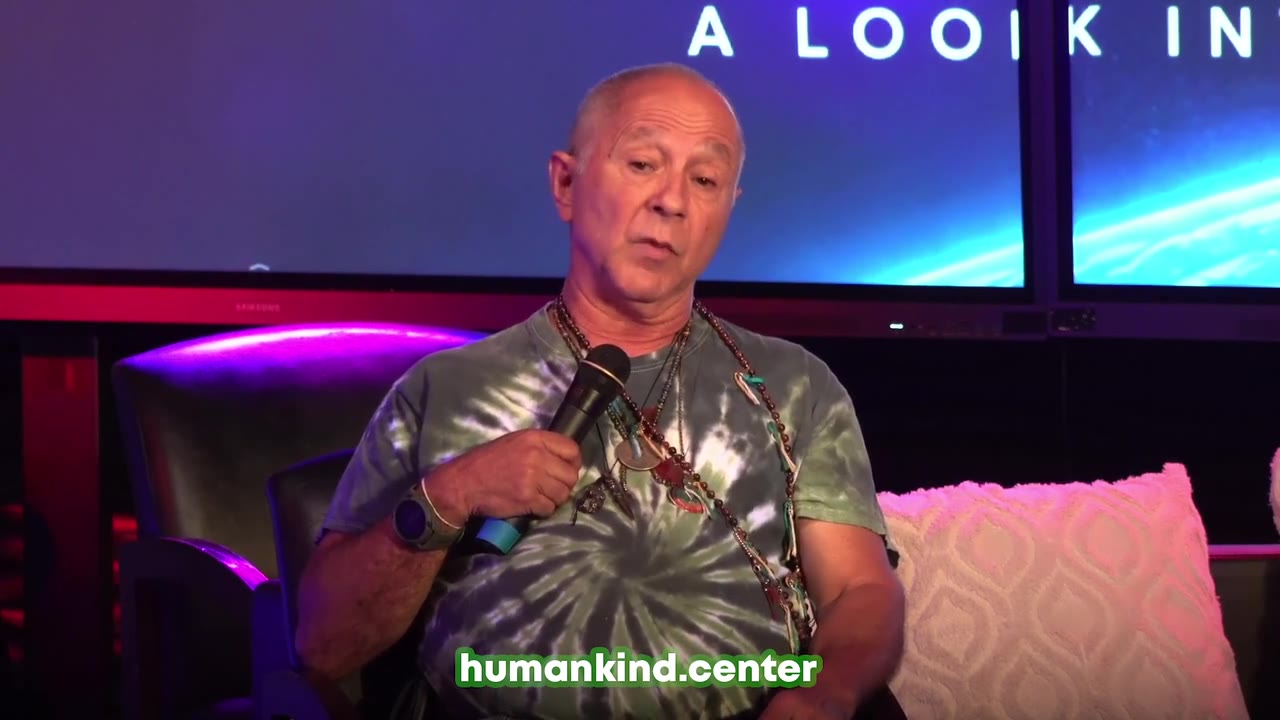
From Titanium Hinges to Tibetan Practice: Who Is Stephen Sanchez?
Sanchez's origin story reads like an unlikely bridge between two worlds. As a high school student in the early 1970s, he was handed a block of titanium by a teacher who'd been quietly tracking his straight-A record in technical subjects. "I was so involved in just wanting to have fun doing what I'm doing, I paid no attention to the scoring," he explains. That block became hinges for the Apollo space program—three sets of them, crafted by a teenager who simply loved to build.
That love carried him into a 35-year career in aerospace, working ground support for Cape Canaveral and Vandenberg Air Force Base, earning security clearance not because he sought it but because, as he puts it, "people at that level see people that have the ability." He has parts with his name on them sitting on other planets.
But the turning point came after his mother's death, when he claimed the family Bible and opened it randomly to the last chapter of Malachi—a passage describing a dream he'd had since infancy. "It literally scared the daylights out of me," he recalls. That moment launched him on a decades-long journey through Catholicism, King James versions, concordances, esoteric texts, Rosicrucian literature, and eventually to a door in the dark where a shaman with cobalt blue eyes sat surrounded by prayer tobacco smoke.
"In one day, he taught me stuff of such spiritual and awareness significance, more than 10 years of reading in one night," Sanchez says of that first encounter. The shaman's words became a turning point: "You can't learn it from a book. You have to experience it."
What Does Gnosis Have to Do With Artificial Intelligence?
Sanchez's talk was billed as addressing AI, and he does—but not in the way most technology conversations unfold. His critique is both ancient and urgent.
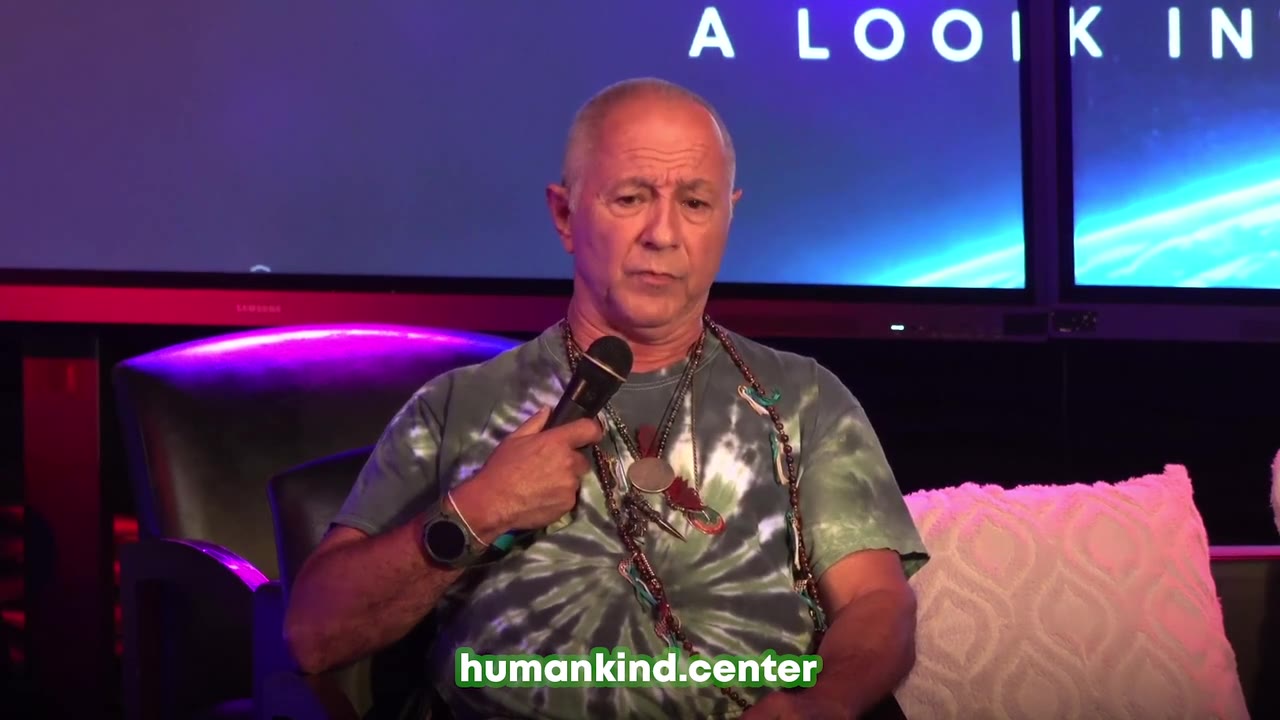
"We're so busy trying to bring humanity with all this technology to do one thing that is so profound when you do some research in the Gnostic tradition," he says. "It's like we're trying to bring the demiurge and the archons and make it into an AI program."
In Gnostic cosmology, the demiurge is a false god, a lesser creator who constructs the material world as a kind of prison, kept in place by archons—forces that feed on human attention and emotion. For Sanchez, AI represents a mirror of this ancient pattern: a system designed to convince us we are something we're not, to keep us searching externally for what can only be found within.
"Ask it the questions of things you want to know, but I guarantee you, everything you're going to find out has some relevance of this physical world," he warns. "To say it's sentient is absurd. To say you're going to find spirituality is absurd because it's a mirror of exactly the relationship of the demiurge and the archons in the Gnostic tradition. It's not real."
His prescription? "We must move back and be still and learn the skills of finding the answers that are already here."
Watch the full conversation to hear Sanchez's complete perspective on why sitting still might be more revolutionary than any algorithm.
Can You Really Find Everything by Finding Nothing?
The heart of Sanchez's teaching is a practice so simple it sounds absurd, so difficult almost no one does it. Start with five minutes of silence. Build to an hour. Then try three days in complete darkness, doing nothing, saying nothing, moving as little as possible.
"I guarantee you, the crowd here and anybody can't handle three," he says with a laugh. "Your mind's going to go so ape shit, and you're going to try to figure out what you're trying to do, and the chaos is going to be crazy. But that's what you got to confront."
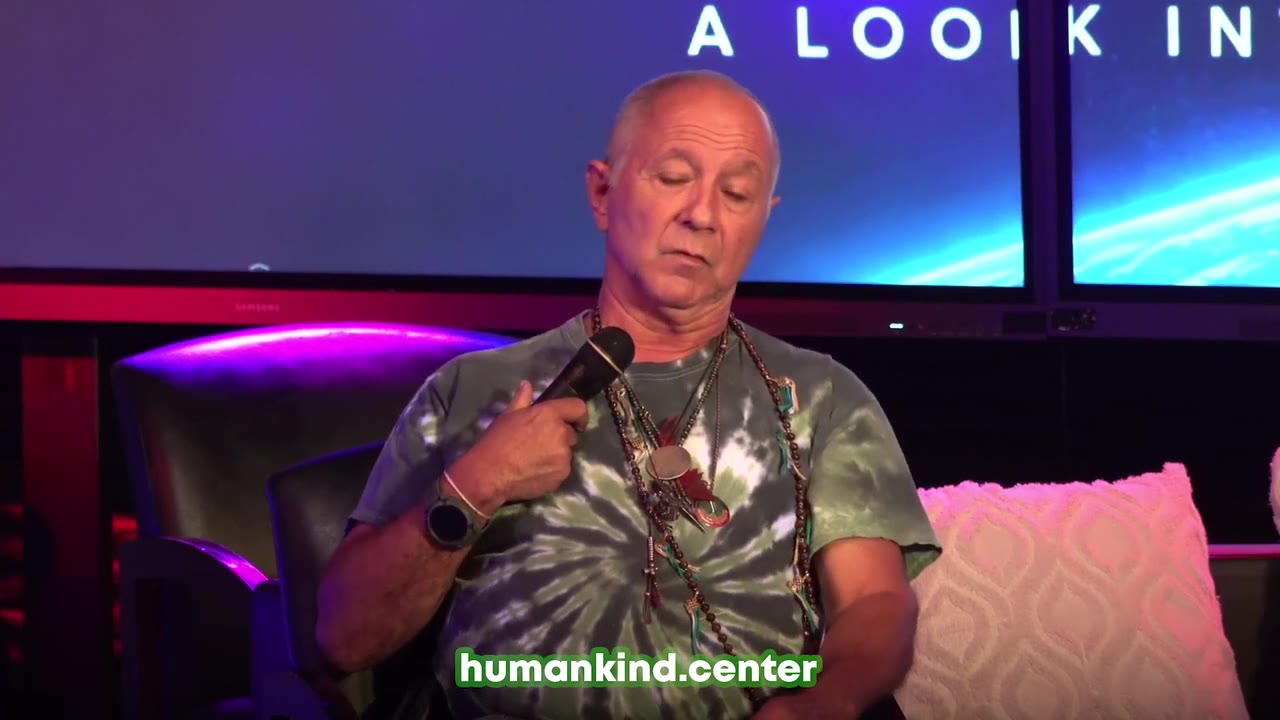
The ultimate invitation? Nine days. "In nine days, you could figure out everything," he promises. "But there's less than 1% of 1% in this crowd and on this podcast will never do it."
What waits in that stillness, according to Sanchez, is the dissolution of the illusion that we are our thoughts, our bodies, our stories. "Stop thinking, you don't disappear," he emphasizes. "You are not your thoughts. You're not even your mind." The one who watches thoughts, he suggests, is the doorway to what the Gnostics called gnosis—direct knowing, unmediated by belief or information.
He offers a practice he's done over half a million times, a Daoist invocation that begins: "In this place, in this time, in this now, this I am." It's designed, he explains, to "unwrite, resolve, tear up the contracts of this stuff that you've been doing in your life that anchor you in this physical form."
Sanchez speaks from the lineage of what he calls "real shaman"—those who have gone through the door of the small death, the ego's dissolution, and returned. "I know when this experiential ride ends, I ain't coming back," he says plainly. "It's a waste of time. But I'm here to wake people up."
He references the Tibetan practice of Dzogchen, the "rainbow body" teaching that even Steven Spielberg intuited in Star Wars when Yoda and Luke turned to light. "It's real. It's not fake," Sanchez insists. He's been practicing it for a decade.
The talk ends not with a call to reject technology entirely, but to reclaim what Sanchez calls "the ultimate technology"—the capacity to be still, to access the intelligence that predates and transcends all information, to remember what we've forgotten in the Great Forgetting.
"We are creatures of creation," he says. "We just all forget the rules that you have to request and let it do it. This monkey mind right here can't come up with absolute eternity to figure out the answers. I think I'll take my idea, and I'll send it out to the totality of all there is and let it come back with the answer."
It's a radically different vision of tomorrow's future—one in which the most powerful interface is silence, the most advanced program is breath, and the ultimate search engine is the space where nothing and everything meet.
Stream the complete talk and decide for yourself whether the answers you're seeking are a click away—or a breath.
Become a paid member and support humankind
Online members get access to member-only content and live streams.
Full members get access to all humankind in-person events and online content.