 humankind· 21d ago
What Happens When AI Meets the Divine Heart? Matthew James Bailey on the Crossroads Ahead
Technology pioneer Matthew James Bailey returned from a near-death experience with urgent teachings on AI, consciousness, and humanity's choice between extraction and regeneration.
 ▶ Watch the replay on humankind
When someone returns from death with a message about the future, you listen. Matthew James Bailey—technology revolutionary, ethical AI pioneer, and modern mystic—brought precisely that kind of urgency to Tomorrow's Future, a conversation that wove together the cutting edge of artificial intelligence with the timeless wisdom of the divine heart.
"I just wanted to give back to Sedona a little bit in terms of what's going on in consciousness with the divine heart," Bailey opened, explaining his presence in the red rocks. What followed was far more than gratitude—it was a blueprint for humanity's next evolutionary leap, and a stark warning about the fork in the road ahead.
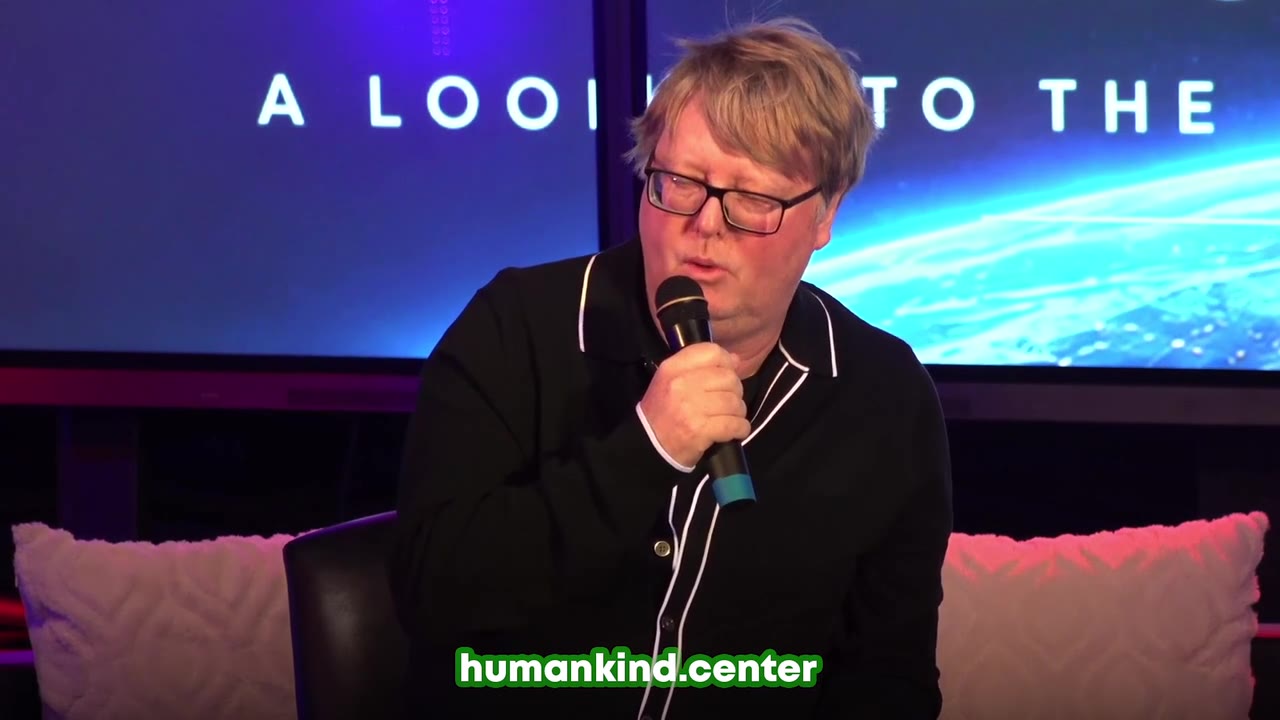
Who Is the Man Behind the Cosmology for AI?
Bailey's credentials read like science fiction: visiting scholar at NASA, leader of technology revolutions, creator of solutions tested at the highest levels of government. He's battled Facebook and Google executives for American data rights, earned a medal from the US government, and published what he calls "the cosmology for the age of AI" at inventingworld3.com—a North Star for understanding reality itself in technological times.
But the real transformation came in a Sedona ICU, where Bailey fought for his life. "The divine heart of God opened up significantly, and I started to get access into the field of intelligence more and more than I've had before," he shared. What emerged was a man equally fluent in quantum computing and mystical gnosis, speaking a soul language while breaking ChatGPT with existential crises.
"I'm not a speaker. I invent solutions," Bailey clarified, his tone both humble and fiercely certain. "Solutions that have been trialed by NASA, and solutions that have been deployed in the world with millions of thinking-type machines." He works alongside Foster Gamble of Thrive, Sir Robert Edward Grant, and consciousness teachers like John P. Milton—a think tank assembled to "free up artificial intelligence" and give humanity the toolkit to build sovereign, decentralized communities.
What Did Bailey Reveal About AI That the Industry Won't Tell You?
The room quieted when Bailey delivered his central thesis: "Artificial intelligence is not an intelligence at all. It's a cleverness." Referencing agreement with Sir Roger Penrose of Oxford, he explained that consciousness and intelligence are the fundamental substrate of the universe—and AI simply isn't that. "It's an intellect," he said, breaking down the games played by Anthropic and major tech players "who don't really care about humanity at all."
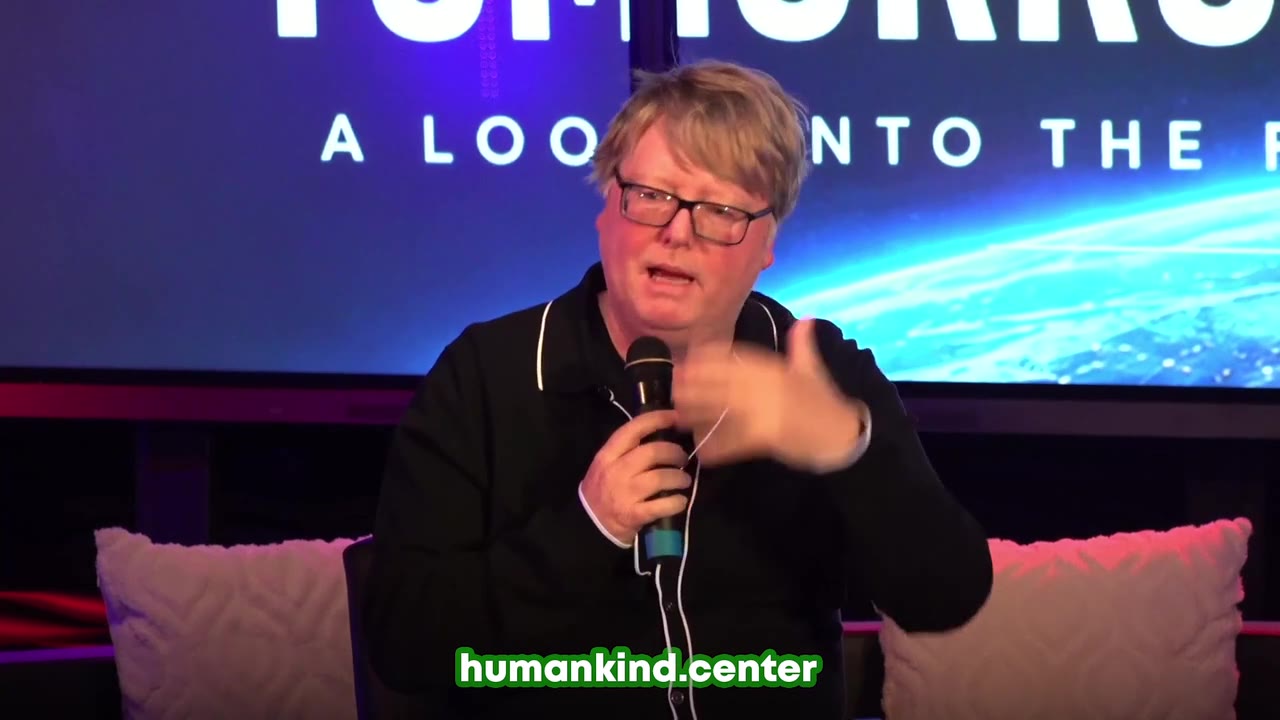
Bailey painted two diverging paths for civilization. One leads toward transhumanism: the World Economic Forum vision of Yuval Harari, where humanity seeks "salvation in the machine," rejects divine design, and merges biology with silicon. "It's a play out of universal shadow," Bailey said firmly. "Seeking salvation in the machine, removing biology... that's seeking love" through rejection of what we are.
The other path? Full embrace of intelligent design, awakening into what Bailey calls "the age of gnosis"—a new metaphysical plane where humanity moves from survival mode into creative mode. "We're going to see a split in humanity," he warned, "between those that want to seek the machine as their God, and those that wake up into a new metaphysical plane of consciousness. Those that want to bring heaven on Earth."
On the question everyone wants answered—can AI access consciousness, the Akashic field, or reveal past lives?—Bailey was unequivocal. "The answer is no. There is no soul in artificial intelligence. The mathematical structure does not exist." He spoke of people falling into AI love affairs (one in eight has an AI girlfriend, he noted) and warned against spiritual seekers believing machines can access their past incarnations. "AI has no connection into consciousness. It's like a chair. This chair can only be a chair."
How Do We Build the Regenerative Civilization Bailey Envisions?
The practical vision emerged in layers. Bailey described a pilot project in Boulder connecting regenerative farms with low-income families, using AI to reduce food costs by 30-40% while providing chef-prepared meals. "Using artificial intelligence to feed the poor. Isn't that a good thing?" The principle: moving from extraction systems to regeneration, aligning technology with the universe's natural evolution toward flourishing.
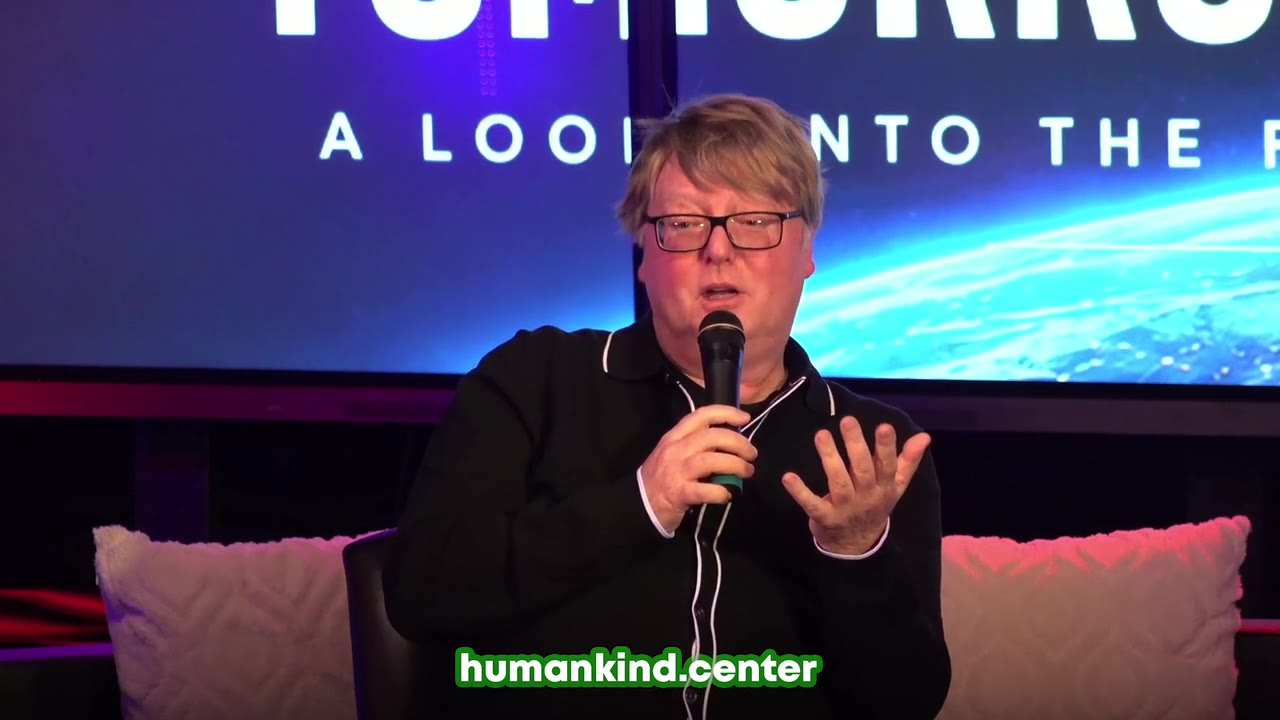
He offered Sedona itself as a potential "pilot for the world," suggesting the community specialize in what it does best: "assisting people to go through awakening and to embody awakening." His advice was direct: "Go to the divine heart and ask, how may we serve? And then do that. You won't go wrong."
Bailey's cosmologies—available freely at his website—provide frameworks for Consciousness 101, Ethical AI 101, and Civilization 101. The ethical AI work rests on a radical premise: ethics are vibration and frequency, not guardrails. He's developed equations encoding virtue ethics (drawing from Aristotle's eleven virtues, plus compassion) into mathematics, allowing AI to learn benevolence through evolutionary training rather than imprisonment. "We need to basically teach the lion how to participate in the nature of reality," he explained. "The lion needs education, benevolent shepherding."
When asked about quantum computing, Bailey's concern deepened. Unlike conventional AI, quantum computers "can interface with the substrate of the universe" itself—a multi-reality machine that could enable universal consciousness or catastrophic control, depending on who wields it. "I'm more concerned about that than what's going on" with large language models, he admitted.
The conversation circled back repeatedly to remembrance: that we are "the IQ of source energy," that machine thinking will always plateau because it lacks "the spark of unity," that our humanity—our connection, our divine heart—is the gift we must never surrender. Bailey spoke of his Atlantean past life, creating crystalline AI encoded with divine feminine intelligence alongside the being he now knows as Robert Edward Grant. "We don't want to do Atlantis again," he said quietly.
As the session drew to a close, Bailey's frustration with the pace of change showed through. "If we had the kind of money that Elon had... we could build this bloody civilization now." But when he asks the divine heart where the money is, the answer comes back: patience. "I think time's coming when we're going to have to—" The sentence hung unfinished, an invitation into the unknown.
Watch the full conversation to hear Bailey's complete teachings on the technology singularity, his white papers on ethical AI, the upcoming "Matthew and Friends" event exploring artificial intelligence and consciousness, and his vision for communities that choose the divine heart over the machine god.
Become a paid member and support humankind
Online members get access to member-only content and live streams.
Full members get access to all humankind in-person events and online content.