 humankind· Aug 22, 2026
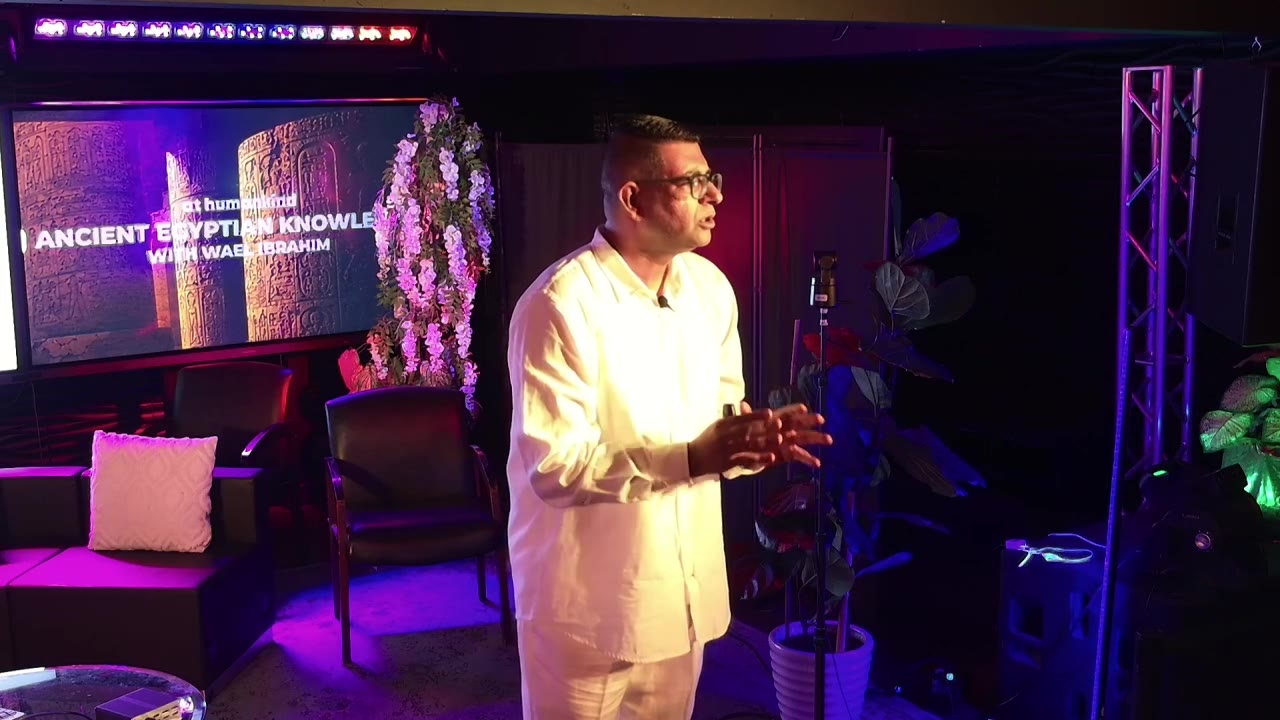
Ancient Egyptian Knowledge with Wael Ibrahim: Beyond the Pyramids to the Heart of a Civilization
Egyptian guide Wael Ibrahim shares a lifetime of temple encounters, revealing how ancient knowledge—not alien mystery—built the pyramids and healed the body.
 ▶ Watch the replay on humankind
When Wael Ibrahim first entered Sedona, he felt the red dust connect to something ancient in his bones. "I thought that the mud and the dust of my body is from Sedona," he told the room, his voice carrying both wonder and reverence. "It's one of the best places I ever seen in my life."
For a man who grew up sleeping in tombs in Egypt's Valley of the Nobles—where childhood naps among carved walls taught him to read symbols before he could read hieroglyphs—this recognition meant something. Ibrahim brought that lifetime of embodied knowledge to share what he calls "a journey by different way" through ancient Egyptian civilization.
Why Does Everyone Get the Pyramids Wrong?
Ibrahim opened with a provocative claim: the pyramids have become "an investment project" for people with "zero informations" who talk about ancient aliens and impossible human achievement. "It's a joke, and silly and shallow," he said, his frustration evident. But his critique came with an invitation—to look beyond the 2.3 million stones and 70-ton granite blocks to see the knowledge system that made such construction possible.
He showed the passport of King Ramesses II—yes, a 3,300-year-old mummy needed documentation to travel to France for study. Profession: "deceased king." The room erupted in delighted laughter. But the point was serious: the mummy preservation was so perfect that modern science remains baffled. "How this mummy is that perfect? Nothing is missing," Ibrahim marveled. This wasn't alien technology—it was medicine.
Ancient Egyptians documented over 1,200 diseases and their cures in medical papyri. They performed complex heart, brain, and orthopedic operations. "We did find in a mummy, still fixed knee for somebody after 3,400 years ago," Ibrahim shared. "It's still there, perfect, in the same condition. Isn't a knowledge, guys?"
Watch the full presentation to see how Ibrahim connects these threads of ancient mastery.
What Did Ancient Egyptians Actually Believe?
The heart of Ibrahim's teaching moved beyond artifacts to philosophy. Ancient Egyptians left the heart inside mummified bodies because they believed it was "the center of the decisions"—the organ through which final judgment would occur. "Everything had one name during the ancient Egyptian time, except the heart," he explained, noting it received both a physical and spiritual name.
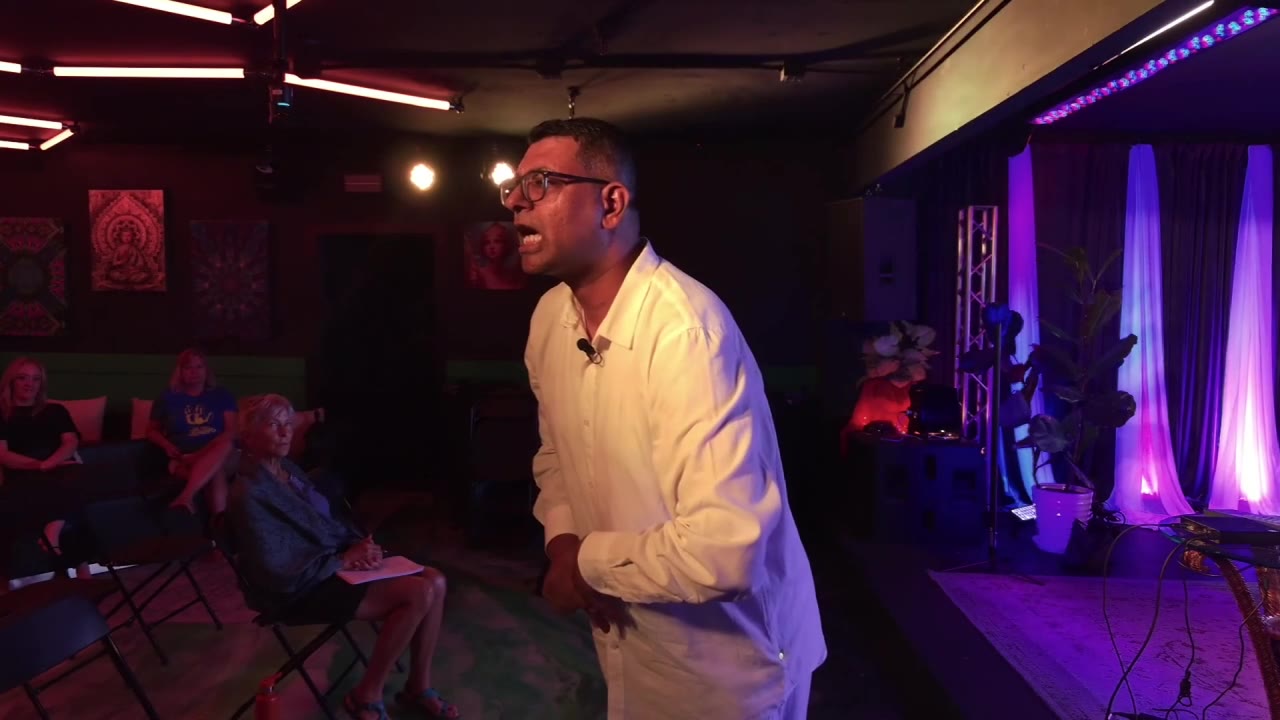
He shared the 24-carat philosophy: "All of us, in our total, we are equal." Not equal in circumstances, but equal in total being—some people carry 20 carats of wealth and two of health, others the reverse. "Why this principle? Because they believe that the God has justice," Ibrahim explained. The distribution creates interdependence, ensuring we need each other.
This wasn't abstract theology. Ancient Egyptians built worker villages with private toilets for families, recorded strikes when food quality declined, and organized their society around talent identification. "They used to pick the talent since the childhood," Ibrahim said. "When you have the knowledge and the talent at the same time in your field, and you are in the right place, you are the best."
The romance threaded through it all. Ramesses II carved thirteen times to his wife Nefertari: "Because of her, the sun rise." He built her a temple where, twice annually, sunlight penetrates to illuminate the inner sanctuary on precise dates. "Out of the knowledge, we go to the romance," Ibrahim smiled.
Can Ancient Symbols Still Speak?
Ibrahim's childhood among tomb paintings cultivated his gift for reading signs. "I always believed they were not by accident. They always mean a story," he said. The Egyptians didn't worship animals—they studied every creature to find which best embodied divine qualities. The scarab beetle became resurrection's symbol because "it's the only creature which is unisex, creates himself by himself." The lioness represented power because she plans the hunt and even the lion fears her.
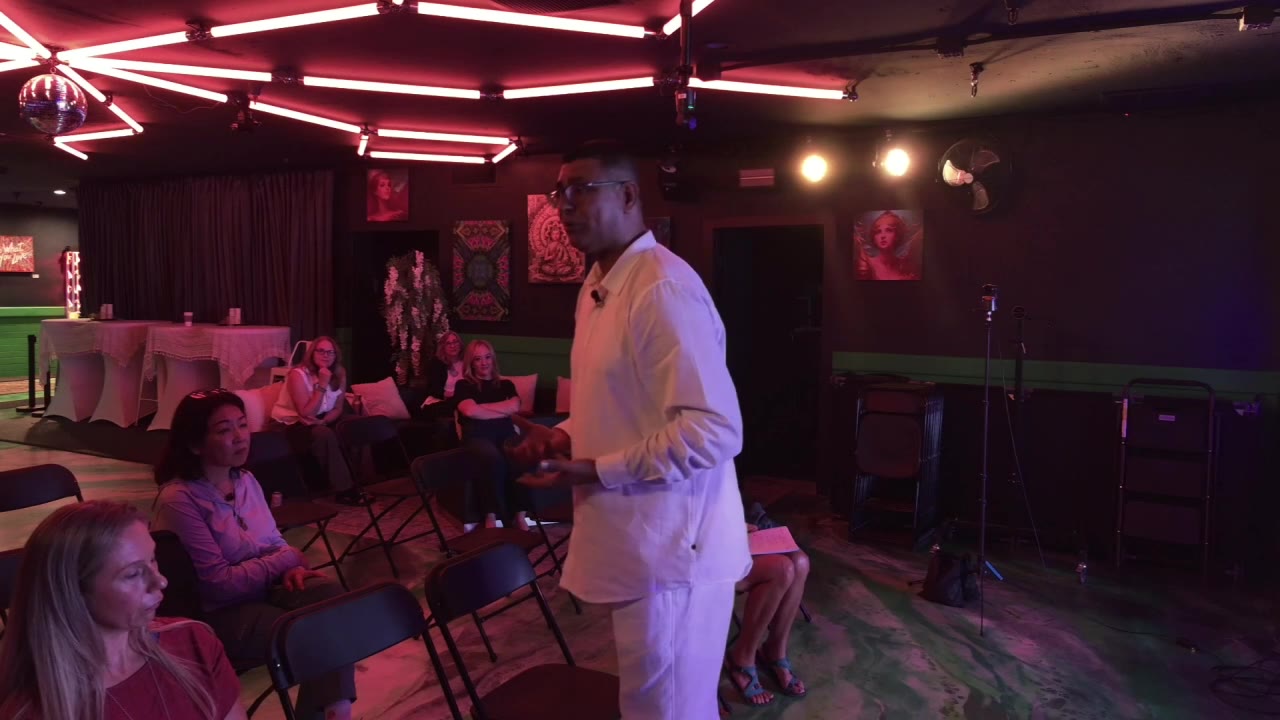
When Ibrahim offered live spiritual readings, the room grew quiet. A volunteer came forward. He held her left hand, asked her to relax, and let symbols come. "There are three trees in front of you," he began. "One of them is dry, two are green... the most important people in your life." She confirmed it was true. He saw her carrying a wet box, water dropping: "You are on a road now, or in decisions, you lose more chances. You are not on the right track."
A second volunteer received messages about graves, about being a giver "without calculations," about recent major life changes. "You are in a shady area. You are well-protected," Ibrahim told her. "You are in the safe zone." Her eyes glistened with recognition.
During the question period, someone asked about sound therapy in the pyramids. Ibrahim's face lit up: "Some walls started to move a little bit" during frequency tests in the upper chambers. The research continues, but the implication hangs in the air—these structures were designed for purposes we're only beginning to remember.
Ibrahim closed with characteristic warmth: "I'm proud of you so much, and you cannot imagine how you gave me a chance to talk today." For a man making his first journey this far from Egypt, carrying knowledge passed through temple stones and childhood dreams, Sedona had offered the perfect meeting ground.
Experience the complete teaching—including the full spiritual readings and Ibrahim's detailed explanations of ancient Egyptian mysteries that modern science is only beginning to understand.
Become a paid member and support humankind
Online members get access to member-only content and live streams.
Full members get access to all humankind in-person events and online content.