 humankind· Aug 6, 2026
Eagle, Quetzal & Condor: Ancient Prophecy Meets Modern Council in Sedona
After seven days of ceremony, indigenous leaders from across the Americas signed a historic document forming the International Council of Indigenous Nations.
 ▶ Watch the replay on humankind
In a room where past and future converged, indigenous leaders from three continents gathered to fulfill an ancient prophecy—and sign a document that could reshape how Native peoples face the modern world.
The seventh day of ceremony in Sedona's red rock country brought together wisdom keepers who had spent a week in dialogue, prayer, and visioning. What emerged was both timeless and urgently contemporary: the official formation of the International Council of Indigenous Nations, signed live as the camera rolled.
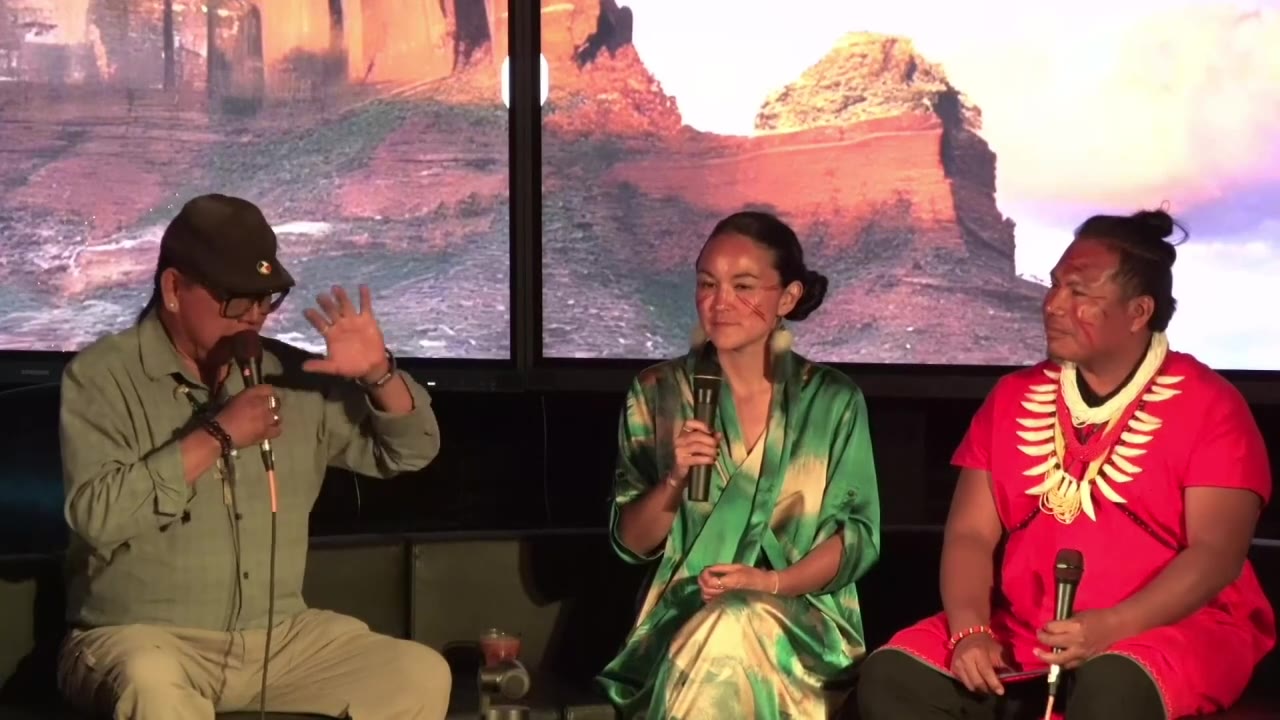
Who Are the Voices Behind This Historic Gathering?
Kumiko Hayashi opened the session with a gentle presence that belied the magnitude of what was unfolding. Born in New Mexico, she splits her time between Sedona and the Amazon rainforest, where she lives with her partner Jimmy Piaguaje at a community center. Her journey began in her early twenties when she bought a one-way ticket to Ecuador "with no money and no plan," seeking a connection with Mother Earth that she couldn't find in mainstream American society.
"What I thought would be a couple weeks or months turned into 10 years," she shared, describing how she "emptied" herself to receive the cosmovisions of indigenous peoples across Central and South America.
Jimmy Piaguaje represents the Siekopai nation—Sieko means multicolored, Pai means people. As the first indigenous filmmaker from his community, he helped document his elders' stories through an 80-year legal battle that culminated in a historic victory: the return of their ancestral lands in the Amazon. "If you look at our people, they're lost," he translated his father's words. "If you look at the river where we live on, where there were so many fish before, they're disappearing."
Bertram Tsotavah, a Hopi tour guide who operates Ancient Pathways Tours, brought grounding from the north. Though he humbly resisted the label of elder—"I'm the messenger," he insisted—his presence carried the weight of ancestral instruction. He'd been unable to attend most of the week due to guiding work and spring planting as a Corn Clan member, but arrived for the final day.
The gathering's architect, Patricio, has spent decades shepherding this vision. An electrical engineer by training who studied with swamis and gurus alongside Native elders, he holds both Western systems knowledge and indigenous wisdom. "Well begun is half done," he quoted one of his teachers, before pulling organizing documents from his bag.
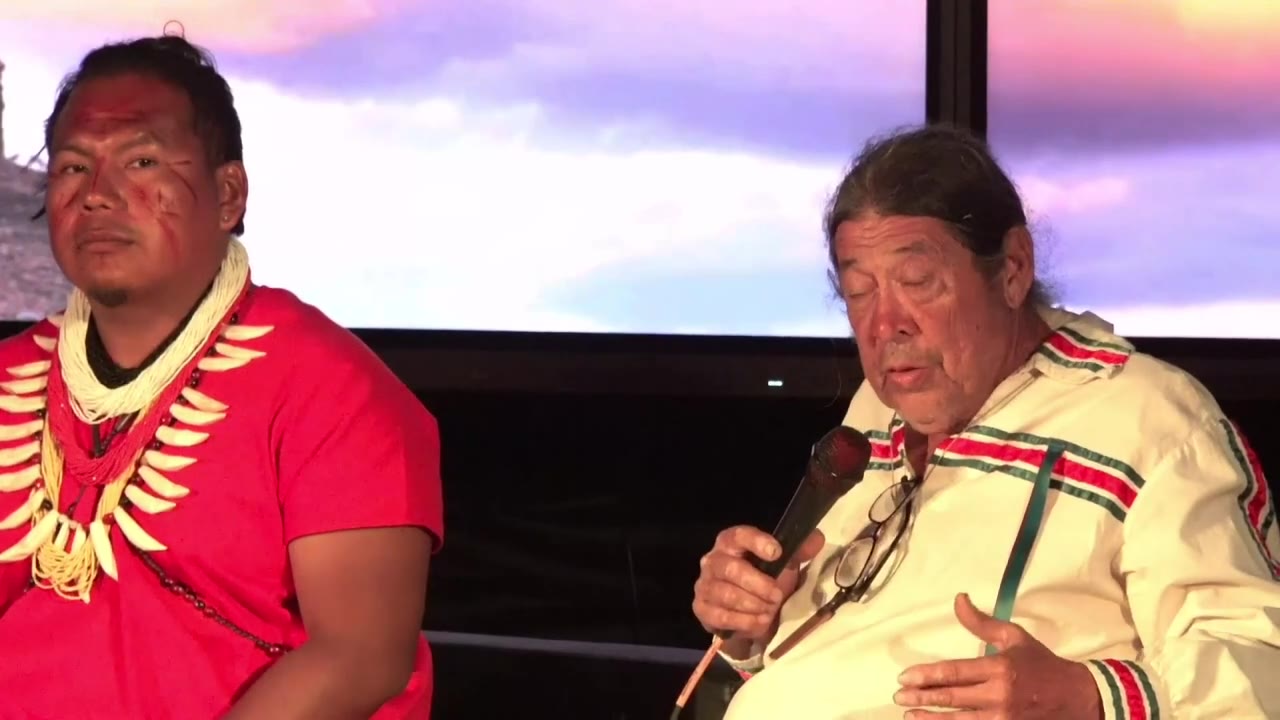
What Is the Prophecy That Brought Them Together?
"This Eagle Condor Quetzal Gathering calls forth different wisdom keepers and elders from nations in the South, the Center, and the North," Kumiko explained. The eagle of the North represents movement, vision, technology, the mind. The condor of the South represents the heart, intuition, feminine nature. The quetzal is the bird of the center, connecting both.
But the prophecy goes deeper than symbolism. Patricio traced its origins to a time when trade routes connected the Americas—when Hopi people wore macaw feathers in their ceremonial regalia, trading turquoise mined in New Mexico for plumes that traveled thousands of miles from Central and South America.
"If you walked for months from Central or South America to pick up some turquoise in New Mexico, you're not just going to grab the turquoise and turn around," Patricio noted. "You're going to stop and chat a while." In those exchanges, cultures, philosophies, and religious insights flowed along with material goods.
Then came interruption. The invasion of an "alternate worldview" severed these connections, leaving cultures in "arrested development." But the ancient seers had foreseen this. They understood cosmic cycles—that human consciousness ebbs and flows with celestial alignments on a 26,000-year wheel.
"They knew that since we're a closed loop, all this stuff goes round and round," Patricio explained. "So the sun comes up again in the morning, and that particular alignment of astral positions is going to come around again."
The Maya became keepers of time, tracking the great wheel so they would know when to sound the call. "A couple thousand years or a thousand years later, suddenly the Maya come boiling out of Central America saying, 'It's time!'"
What Happened When the Prophecy Met Political Reality?
Yellow Bird, who'd been awake for seven days tending ceremonial fire, stood to offer context. He'd first entered an Eagle Quetzal Condor council in 1999 in Nambe, New Mexico—an underground meeting of 300 to 500 elders "protected by armed guards with guns."
"A lot of work to go and move something like this or follow those instructions of the elders," he said quietly.
The gathering had planted what Kumiko called a "rainbow frequency" around the altar that "came up, and we felt it go out here" into Sedona's landscape. Each person carries a color, an origin. The ancient Aymara flag called the Wiphala represents each color equally—the template for this new Earth consciousness being birthed.
But Patricio was clear-eyed about the obstacles. "We have these pesky governments that just do not grasp the idea that human beings need to work together again. So there are hurdles to bringing the eagle, quetzal, and condor together, called borders and ICE and immigration."
His solution: nation must meet nation. "It should be that never again should a tribe or community face an international corporation or established government alone again."
The math is striking. In North America, Native people represent 3% of the population. In Mexico and South America? Eighty to ninety percent. "Instead of a couple million, we're talking about hundreds of millions of Native people united, if we can form that unity."
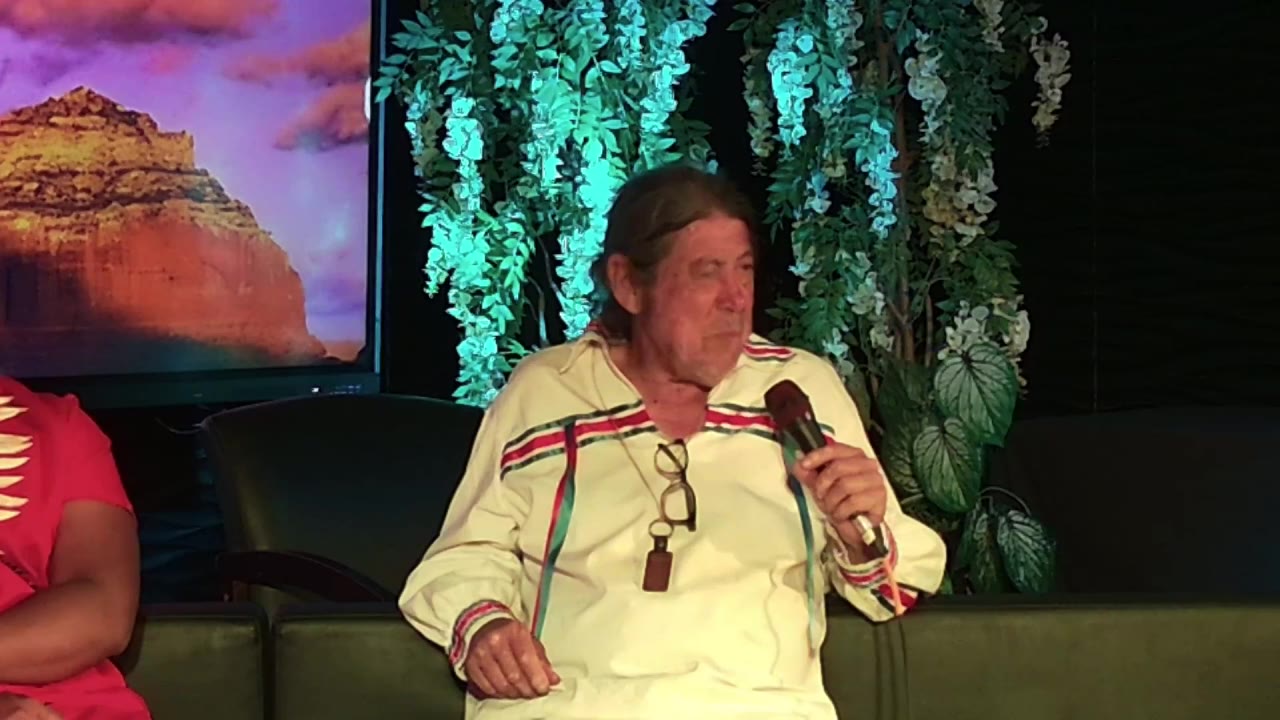
Then came the moment that made it real. Patricio pulled papers from his bag. Six nations had already signed. Jimmy would be the seventh—"lucky number seven," someone called out, invoking the seventh generation.
"Here we're making history in front of all of you," Kumiko announced as Jimmy bent over the document, pen in hand.
The room erupted in applause.
Yellow Bird lifted his voice in a Lakota song honoring mothers and grandmothers, asking those present to close their eyes and "go into the inner universe of yourself." The melody wove through the space, feeding spirits as the ceremonial fire had been fed for seven days and nights without going out.
"This isn't about me," Yellow Bird said. "It's about being in this time and space with Mother."
When questions opened, someone asked about ancient plant medicine trade routes. Patricio's engineer mind engaged: ayahuasca vine and leaves would have been too heavy, too perishable for the journey north. But Kumiko offered another answer—in plant medicine ceremonies, "past, present, and future fuses," allowing spiritual travel beyond physical limitations. Jimmy's elders would see visitors coming in visions before canoes arrived.
"We live in a time of infinity," Kumiko said. "There is no limitations, and these medicines and these trade routes that are coming back is for this consciousness to come forth for the healing and protection of our Mother Earth."
Laura Sa, who works in refugee camps and conflict zones from Syria to Gaza, stood to connect the threads. Indigenous peoples as "sacrificial pawns in a chess game" for natural resources, strategic positioning, data. "It's time that we, as indigenous people, step forward to protect what has always been ours, but has always been taken without our consent or permission."
The gathering's dream extends to Sedona itself. Kumiko and Jimmy envision reclaiming land here where all people can pray and ceremony freely, without permits or permissions—a northern anchor for the work happening in the reclaimed Amazon territories of the Siekopai.
"Each one of us, we're a part of that rainbow frequency," Kumiko said. "We have a mission in this birthing of this new Earth consciousness."
Watch the complete gathering to witness the songs, the teachings, the signing ceremony, and the moment ancient prophecy became contemporary political reality. This is how the multicolored people fly together again.
As Patricio's teacher taught him: well begun is half done. The other half? That's the work ahead. Watch and see what happens when cosmovision meets council chambers, when ceremony births strategy, when the eagle, quetzal, and condor decide never to face the future alone again.
Become a paid member and support humankind
Online members get access to member-only content and live streams.
Full members get access to all humankind in-person events and online content.