 humankind· 20d ago
Origin Point Episode 3: Why One Senate Report Could Reshape the Entire Crypto Market
Jayse unpacks the Tether scandal, a 500% crypto surge, and why regulatory chaos might be the best thing that ever happened to XRP.
 ▶ Watch the replay on humankind
When Jayse went live for episode three of Origin Point, he had planned a quieter session—until two bombshell stories broke the same morning. What unfolded was an hour-long decode of seismic shifts in the crypto world: a Senate report linking the top stablecoin to terrorism, a little-known crypto exploding 500%, and the unraveling of what Jayse calls "the Bitcoin bubble."
This wasn't just news analysis. It was a master class in reading between the lines of a financial system in transformation.
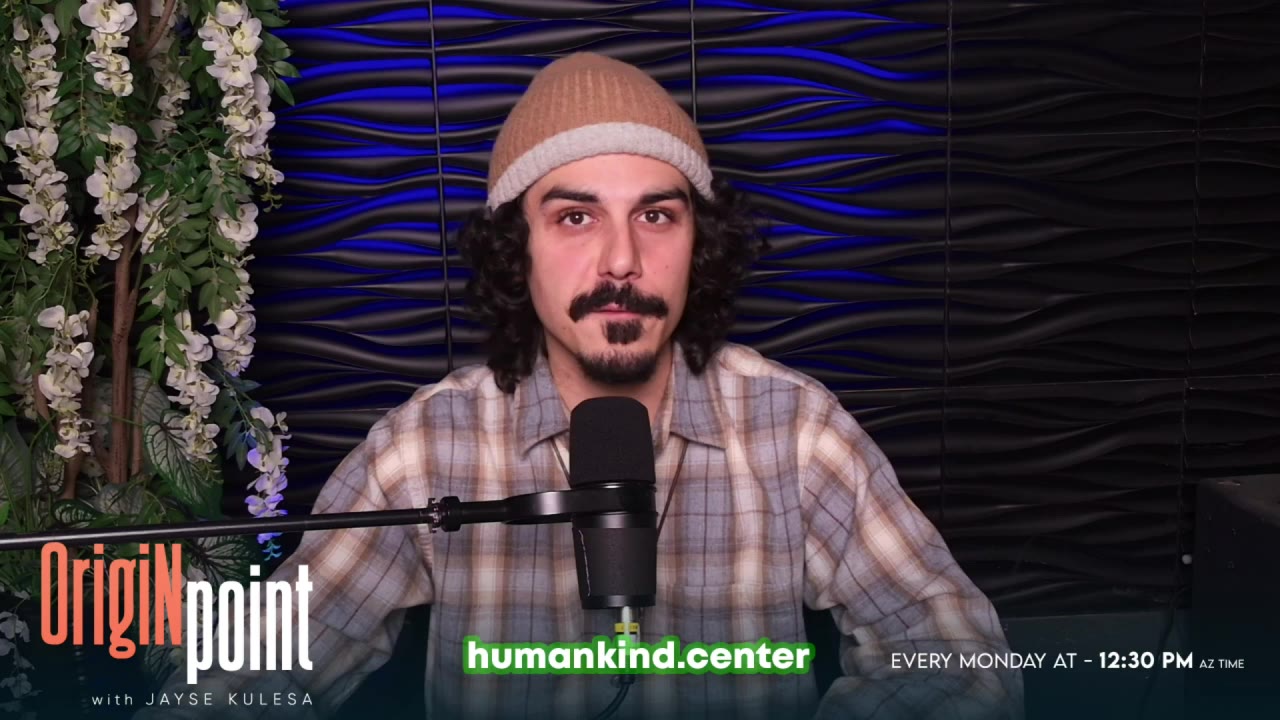
Who Is Jayse—And Why Does He See Crypto as Spiritual Infrastructure?
Jayse holds the room with the ease of someone who's spent years translating complexity into clarity. He's not a hype man. He's a guide—walking viewers through the labyrinth of ISO standards, ETFs, tokenization, and regulatory chess moves with the patience of a teacher and the insight of someone tracking patterns most people miss.
"What the internet did for information, making everything instant and accessible anywhere in the world at any time, that's what crypto is doing for money," he explains early in the session. It's a frame he returns to again and again: utility over speculation. For Jayse, crypto isn't just an investment class—it's the infrastructure of a new world being built in real time.
He speaks to his audience as collaborators, not consumers. "I want you to make your own decisions," he says. "Take this info, do your own research, come to your own conclusions." It's an ethos that runs through his Conscious Crypto Academy, a five-year-old community of over 150 investors meeting weekly to learn, strategize, and build together.
And he's deeply attuned to the isolation many feel. "A lot of people come in and they don't even have people in their personal life to talk about this stuff with—not just crypto, but awakening, consciousness, disclosure." Origin Point is as much about creating that space as it is about market analysis.
What Happened When Quant Surged 500%—And Why It Matters
The first major story Jayse unpacks is the explosive rise of Quant (QNT), an ISO 20022-compliant crypto that shot up nearly 500% after a banking coalition called the Clearing House—responsible for moving $2 trillion a day—selected it to settle tokenized deposits on their network.
"If you would have put in $1,000, it'd be $5,000. If you put in $10,000, it'd be close to $50,000," Jayse notes. But he's quick to add context: this is still speculative gain, based on anticipated utility that won't go live until 2027. The real magic, he argues, happens when utility kicks in—when banks are actually using these assets for settlement, not just betting on them.
Jayse explains ISO 20022 like he's teaching a class: it's the international standard all banks must follow for payments. Only about a dozen cryptos are compliant—XRP, XLM, XDC, HBAR, Quant. Bitcoin isn't. Ethereum isn't. Solana isn't. "That doesn't mean they won't be successful," he clarifies, "but they won't have as much chance to get adopted into the international banking infrastructure."
He also highlights Stronghold (SHX), up 44% this week—not from its own news, but from liquidity flowing out of Quant gains. "It's probably my second favorite crypto behind XRP," he shares. Stronghold acts as a bridge between XRP and XLM, backed by seed funding from both Ripple and Stellar. "It's very under-the-radar... but I think it has huge return of investment potential."
Watch the full breakdown of ISO compliance, interoperability, and why utility-driven markets are about to change everything.
Why Is a Senate Report on Tether Being Called the Beginning of Bitcoin's End?
The second story is heavier—and potentially more consequential. Senate Democrats released a report titled "Tethered to Terrorism: Crypto in Iran's Shadow Banking Network," revealing that 84% of sanctioned Iranian-linked crypto wallets were using Tether (USDT), the world's largest stablecoin. Iran's Central Bank held over $507 million in USDT.
Tether responded by announcing they'd frozen $550 million in Iran-linked accounts over the past year—and nearly $5 billion all-time. But for Jayse, this is the unraveling he's been tracking for years.
"Tether has been shown to be artificially propping up Bitcoin," he explains. The pattern: Tether mints hundreds of millions or billions of dollars of stablecoin—without independent audits proving they have reserves—then injects it into Bitcoin. Bitcoin's price surges. "It's not really doing anything new or useful. It's that this massive amount of fraudulent money keeps getting injected into it."
If Tether collapses, Jayse argues, Bitcoin's dominance collapses with it. "That could be the main thing that takes Bitcoin out of the market and starts allowing other coins which actually have utility... to take that number one spot. My vote's on XRP."
He's struck by the irony: it's the Democrats—historically hostile to crypto—exposing this. "They think they're going after the biggest thing that would topple the crypto industry. But it actually helps crypto become less compromised."
He also dismantles a common piece of FUD (fear, uncertainty, doubt): that Ripple's stablecoin RLUSD will replace XRP. "RLUSD runs on the XRP Ledger. It does not exist without XRP." More importantly, RLUSD is dollar-based and programmable—meaning it can be frozen. Foreign superpowers forming systems like BRICS don't want that. "XRP stands as the international diplomatic solution to a truly non-controlled currency."
The episode closes with a reflection on regulatory limbo as a strategic advantage. XRP is the only major crypto with a court order declaring it a commodity—legal clarity that can't easily be rolled back. "If regulatory clarity continues to get drawn out," Jayse muses, "that could literally be the best scenario for XRP."
For anyone trying to understand not just what is happening in crypto, but why it matters and where it's going, this episode is essential viewing.
Become a paid member and support humankind
Online members get access to member-only content and live streams.
Full members get access to all humankind in-person events and online content.