 humankind· Aug 10, 2026
Luna Lauren Transforms Fear Into a Mirror: Inside a Powerful Full Moon Activation
Mental health advocate Luna Lauren guided a room through her F.E.A.R. framework—Friend, Evidence, Awareness, Response—ending with a mirror practice that left hearts cracked open.
 ▶ Watch the replay on humankind
What if the thing you've been running from is actually a child waiting for a hug?
That's the question Luna Lauren posed to a room full of seekers gathered under the full moon for Starborn Activation: Turning Fear into Power. Over the course of nearly an hour, the mental health advocate and touring workshop facilitator dismantled the cultural narrative that fear is something to conquer—and rebuilt it as something to befriend.
"I have lived a lot of my life on autopilot," Luna shared early in the session, her voice steady and warm. "Here's the things that I do, here's who I am, here's my identity, here's what I like, here's what I don't like. Here's what scares me, here's what excites me. And allowing that identity and that framework to depict my life and my choices."
But this wasn't a night for autopilot. It was a night for curiosity—Luna's chosen lens for the entire experience. And curiosity, she reminded the room, doesn't require fixing or doing. It just asks you to look.
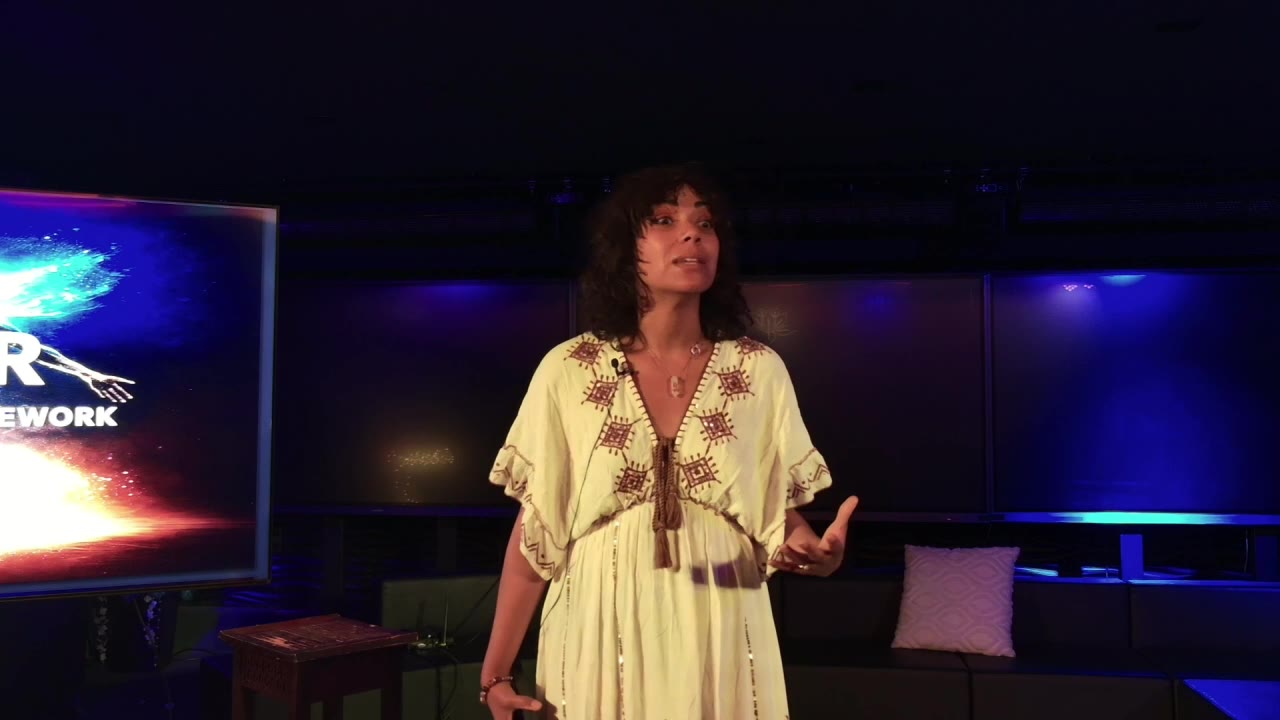
What is the F.E.A.R. framework—and why does it work?
Luna built her teaching around a four-part acronym, transforming FEAR into a series of questions that turn the monster into a mirror.
F: Friend or Foe? Is your fear operating as an enemy—something dangerous and violent—or as a teacher trying to show you something?
E: Evidence or Emptiness? Is the fear pulling from something real happening right now, or is it inflated by past trauma or future projection? "Think of a big balloon," Luna said. "The balloon is big and it's large, but what's on the inside? It's air. There's no substance on the inside."
A: Awareness or Avoidance? Once you know where the fear is coming from, do you turn toward it—or away? "I have looked at my fear before," Luna admitted. "I have noticed this is where that's coming from, and then I avoid it for another six months. Easy."
R: React or Respond? When you finally face it, do you lash out—or do you respond with presence and care?
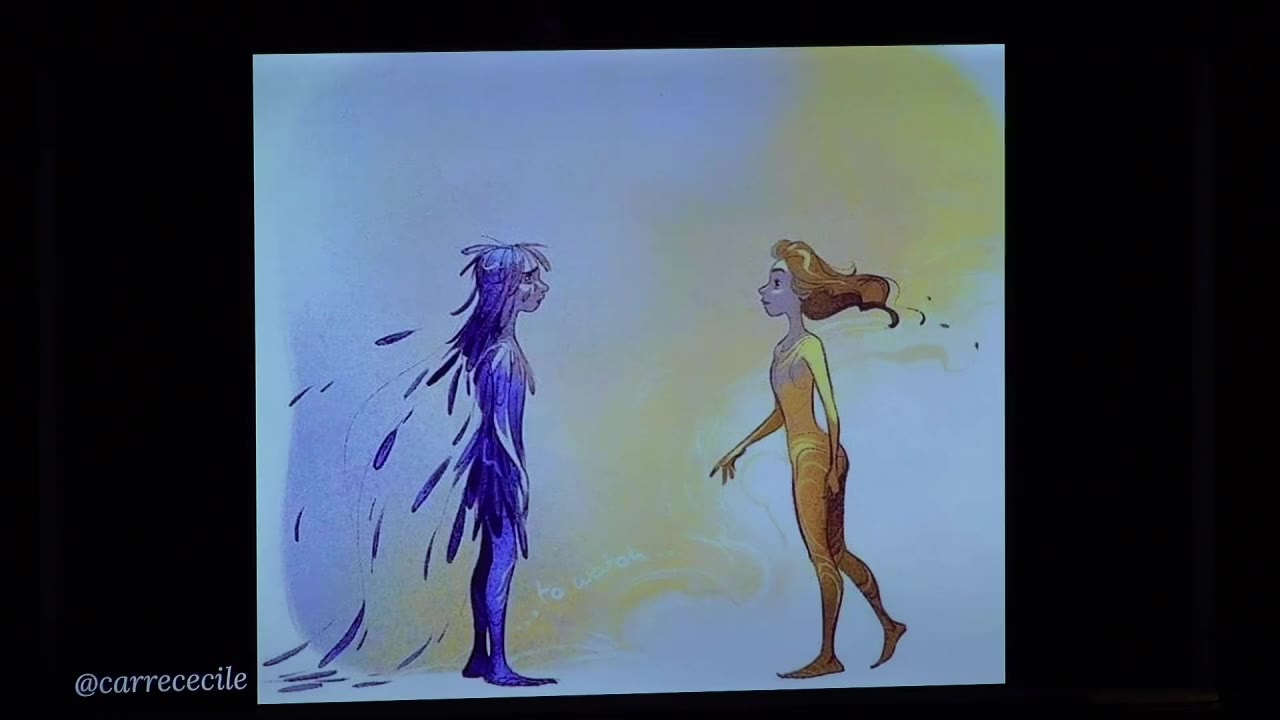
To illustrate, Luna used a series of illustrations by artist Cecile Corée: a small figure cowering from a towering shadow; then turning to face it; then discovering it's the same size; and finally—embracing it as a child.
"A lot of times, the things that scare us the most," Luna said, "they're layered with so many stories of what happens if we look at the fear, face the fear, work with the fear. And a lot of times, the fear stems from the things that happened when we were young."
Watch the full teaching and visual journey in the replay.
Who is Luna Lauren—and what shaped her approach?
Luna didn't arrive at this work by theory. She arrived by necessity.
Three years ago, she sat on a friend's bed in Orange County, wrapped in a blanket, sweating through a panic attack. She was facing a choice: remove the breast implants she'd had for over a decade—implants that had become part of her identity—or continue sacrificing her health.
"My fear was cycling," she recalled. "The scars you'll have, you're going to feel different, it's not going to be the same, and just these stories that were coming in my head. And in that moment, even though I was terrified and these thoughts were cycling, my body was leaning in and saying, 'Do it. Do it. You're going to feel so much better. Just do it.'"
She chose her body. The next morning, bandaged and healing, she felt the sun on her face and a weight lifted from her chest. "I had this moment of just joy and freedom, and thank goodness I chose this for myself."
That pivotal moment inspired the framework she now teaches around the world. Luna has spent four to five years touring as a mental health advocate, blending psychology, creativity, and what she calls "integral consciousness"—the idea that there's no one right way to heal. "We all get to have that freedom to choose," she said, "but it takes that permission to be able to have the awareness of how we want to work with it."
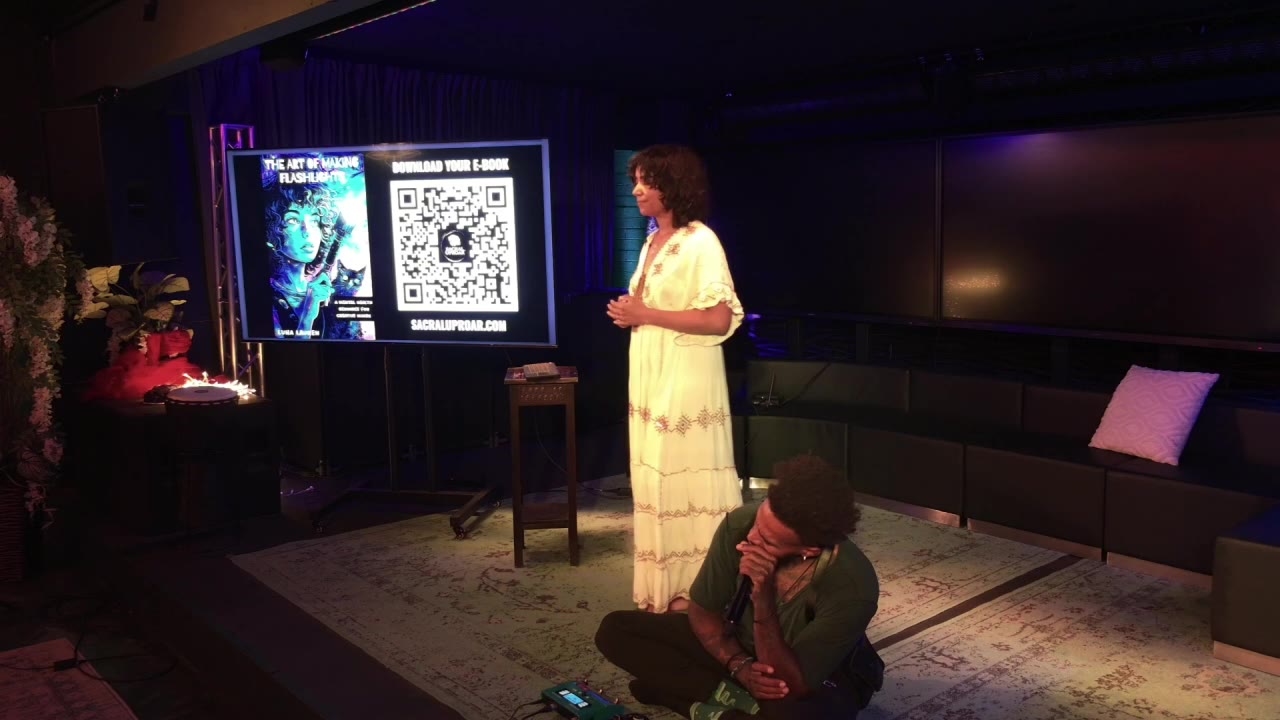
She's also the author of The Art of Making Flashlights, a mental health resource guide she gifted to everyone in the room. The metaphor: build your own tools so that when it gets dark, you have light.
What happened when the mirrors came out?
After the teaching, the room shifted. Luna invited her partner, Larome Swiss—a conscious musician and ceremonial vocalist—onto the stage. As he began layering throat singing, loops, and harmonic tones, Luna handed each participant a small mirror.
"We all have mirrors in our home," she said softly, "but we look at mirrors to critique. To check, is there something in my teeth? Is there something on my face? How do I look?"
She paused.
"What they never told us is that mirrors are actually portals."
With eyes closed, participants were guided to imagine approaching a door—about to meet someone for the first time. On the count of three, they opened their eyes and looked into the mirror. Not to analyze. Not to fix. Just to see.
"Notice the features on their face," Luna guided. "The journey that they've been on to get here. The stories, the beliefs, the experiences. Wow. And they're still here."
Then came the practice: Focus on one eye. Say, "I love you." Shift to the other. Receive it: "I love you, too."
"Actually hear yourself say it," Luna whispered over the sound, "and if any emotions come up, it's okay."
The room fell into a deep, embodied silence. Some participants smiled. Others cried. All of them stayed.
"The biggest illusion," Luna said, "is that we were told to have to hide and put those parts of ourself that feel in a closet. And that's not true."
Larome's voice wove through the space—"I love me as is... my soul is ever expanding"—as Luna closed the practice with a final invitation: "Maybe next time you look in the mirror, instead of critiquing, instead of judgment, maybe you can just meet yourself like this. Just say, 'Hi. I see you. I honor you. And I love you.'"
As eyes reopened and mirrors were placed over hearts, Luna offered one last reflection: "When you begin to deepen the intimacy with yourself and for yourself, utilizing the mirror, the thing that we have everywhere, just watch what's possible and watch what changes."
Luna and Larome will continue offering events and retreats at humankind throughout the year. Larome's music—from soul and urban to electronic with a spiritual twist—is available on Spotify and Apple Music, including collaborations with Luna on his album Infinite Heart. The two are also hosting an event in Venice Beach on May 16th with One Golden Thread.
Experience the full activation, mirror meditation, and live sound ceremony in the replay.
Become a paid member and support humankind
Online members get access to member-only content and live streams.
Full members get access to all humankind in-person events and online content.